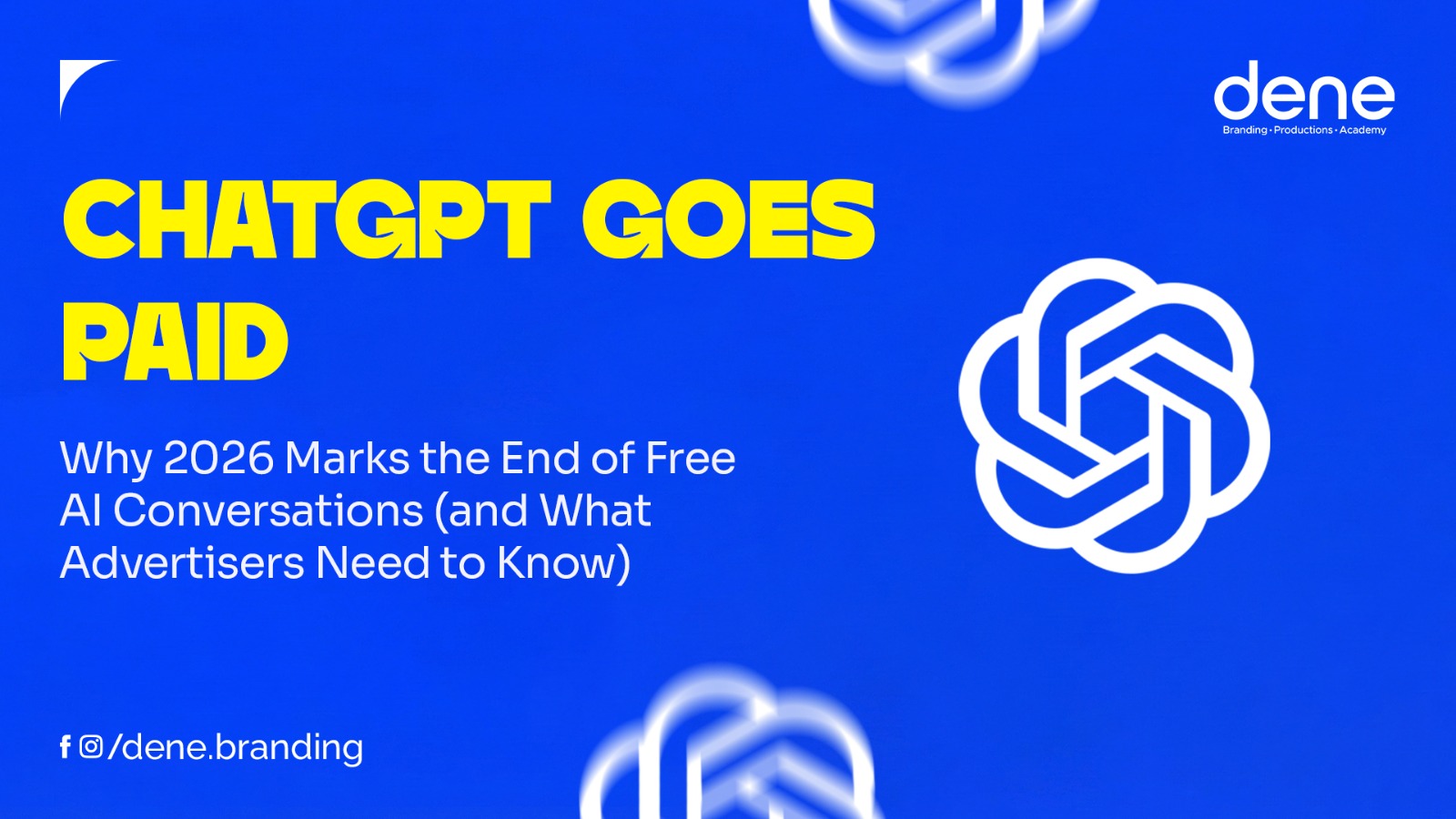
For the past two years, ChatGPT felt like the internet’s rarest phenomenon: powerful intelligence, no ads, no visible monetisation, and no obvious commercial pressure. It functioned like a public utility rather than a media platform. That phase is now coming to a close.
2026 will likely be remembered as the year AI stopped being “free” in spirit and officially evolved into a monetised media channel. Not because users were suddenly forced to pay, but because attention at this scale cannot remain unmonetised indefinitely. For advertisers, marketers, and brand strategists, this shift isn’t a threat. It is one of the most significant intent-driven opportunities since the rise of Google Search.
Why Monetisation Became Inevitable for ChatGPT
ChatGPT now serves an estimated 800 million weekly users worldwide, and the most important detail is this: nearly 95% of them are on the free tier. Every interaction whether it’s a prompt, a follow up question, an image generation, or a complex search consumes massive computational resources. GPUs don’t run on goodwill, and infrastructure at this scale comes with extraordinary cost.
OpenAI has publicly stated its ambition to reach approximately $25 billion in annual revenue by 2029. Subscription growth alone cannot realistically support that target. Even with Plus, Pro, and Enterprise tiers expanding, the economics remain clear: enormous usage, enormous infrastructure costs, and limited monetisation levers. Advertising was not a “sell-out” decision. It was a structural necessity.
Sam Altman has openly acknowledged that advertising is being explored but with a crucial condition. Ads must not damage user trust. This explains why OpenAI deliberately slowed ad experimentation in late 2025, prioritising refinement over a rushed rollout. The real momentum begins in 2026.
How the 2026 Rollout Will Likely Unfold
ChatGPT advertising will not arrive as a single dramatic launch. Instead, it will follow the same phased deployment approach OpenAI uses for all major platform shifts.
Early 2026 is expected to begin with a closed beta phase, where search style ads appear in limited contexts with restricted advertiser access. This phase will focus heavily on relevance, safety, and user experience rather than scale.
As 2026 progresses into mid year, ads are expected to surface more broadly within the free tier. Sponsored responses, early conversational placements, and performance-based pricing models will begin to appear. This period will likely be experimental, with rapid iteration based on user behaviour and feedback.
By the final quarter of 2026, ChatGPT is expected to support a full advertising ecosystem. Sidebar placements, sponsored content blocks, promoted GPTs, and branded tools will become standard. Paid tiers Plus, Pro, and Enterprise will remain ad free, turning privacy, focus, and uninterrupted usage into a clear subscription value proposition.
Notably, early Android builds already reveal internal components such as sponsored carousels and marketplace placements. This isn’t theoretical planning. The infrastructure is already in place.
What ChatGPT Advertising Will Actually Look Like
ChatGPT advertising will not resemble traditional digital ads. There will be no banners, pop ups, or intrusive interruptions. Instead, ads will be native, conversational, and deeply context-aware.
The most powerful format will likely be conversational sponsorships, where recommendations are presented naturally within responses and transparently attributed to a sponsoring brand. Rather than shouting for attention, brands will appear as helpful contributors to the decision process.
Hyper relevant native inserts will be embedded directly within answers, aligned with the user’s intent rather than placed around content. Sidebar brand mentions will offer low disruption visibility, while promoted GPTs and branded tools will allow companies to sponsor genuine utility instead of noise.
Generative ads will further differentiate the platform. Ad copy will be created dynamically in real time, tailored to the exact context, language, and intent of each conversation.
A New Targeting Model: Intent Over Identity
Unlike traditional ad platforms that rely on cookies, demographics, or behavioural tracking across the web, ChatGPT operates on intent. Targeting is expected to be driven by session context, conversation flow, semantic meaning, and where enabled user memory preferences.
This creates a fundamentally different advertising model. Ads are triggered by what users are actively trying to solve, decide, or understand at the moment. Pricing will likely be based on meaningful actions or engagement rather than passive impressions. This is intent marketing in its purest form.
Why This Redefines the “Free” Experience
The free tier of ChatGPT will not disappear. It will evolve. What was once a neutral utility will become a discovery environment and a media channel reaching over 700 million users. Subtle commercial influence will be part of the experience.
Users will face a clear choice. They can pay approximately $20 per month for a completely ad-free experience, or they can continue using ChatGPT for free while accepting minimal, highly relevant sponsorships.
Unlike Google, which monetises what users have not yet decided, ChatGPT monetises decision making itself. When the AI delivers the right answer at the right moment, sponsorship feels natural rather than forced and the conversion potential is enormous. This alone could push ChatGPT beyond $1 billion in advertising revenue during 2026.
The Opportunity and the Risk for Advertisers
Early advertisers will benefit from lower beta pricing, early access to recommendation systems, and the ability to establish category leadership before saturation. Just as importantly, they will operate within a high-trust environment at least initially.
However, the risks are real. The fastest way to fail on ChatGPT is by eroding trust. Manipulated answers, biased recommendations, or excessive commercialisation will push users to opt out, upgrade to ad free tiers, or trigger regulatory scrutiny.
Winning brands will focus on usefulness, clarity, and genuine value rather than aggressive persuasion.
How Marketers Should Prepare Right Now
ChatGPT should not be treated as just another advertising platform in 2026 media plans. It represents an entirely new layer of influence.
Smart marketers will begin optimising for conversational discovery instead of traditional keywords. They will invest in rich, structured brand knowledge that AI systems can reliably reference. Custom GPTs will be built as branded utilities, not promotional gimmicks. Conversion APIs, intent tracking, and AI-native measurement frameworks will replace cookie-based attribution models.
Budgets will gradually shift away from low-signal display advertising and toward AI driven intent media.
The Bigger Picture
Search is not disappearing but it is being challenged at the decision layer. And historically, that is where the money always moves.
ChatGPT going paid does not mark the end of free AI. It marks the beginning of AI as the most influential media channel of the decade.
Brands that adapt early will shape recommendations. Brands that delay will compete for leftovers.
In 2026, success will not belong to those who shout the loudest but to those who help users the best, at the exact moment a decision is made.